Motor Sizing Fundamentals: Building a Solid Foundation for Motion Control
Whether you’re designing a new motion system or troubleshooting an existing one, choosing the right motor is critical to performance, reliability, and efficiency. The Motor Sizing Fundamentals section is designed to help you understand the core principles behind electric motor selection—without the confusion.
From calculating torque and inertia to understanding duty cycles and load profiles, this page breaks down the essential concepts that power every successful motor sizing decision. Whether you’re new to motion control or just need a quick refresher, you’ll find practical, engineer-tested insights you can apply right away.
Start here to build your foundation—and size with confidence.

Motor selection may seem like a simple part of the motion control design process—but anyone who's done it knows that it's often one of the most time-consuming and error-prone steps in the entire workflow. Whether you're working on a high-speed conveyor, a precision leadscrew actuator, or a complex multi-axis robot, ...
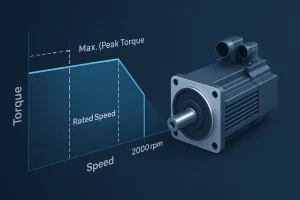
Selecting the right servo motor is essential for achieving optimal performance, efficiency, and reliability in motion control applications. While basic motor specifications such as rated speed, rated torque, intermittent (peak) torque, and rotor inertia are important starting points, the most accurate and effective selection method involves evaluating the motor’s performance ...
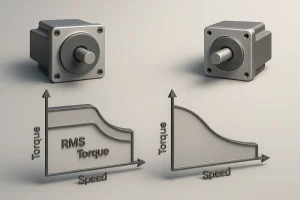
In the world of motion control, servo motors are often selected for their precision, efficiency, and ability to dynamically respond to complex motion profiles. Two essential concepts that engineers must understand when working with servo systems are RMS torque and intermittent torque. These values play a critical role in selecting ...
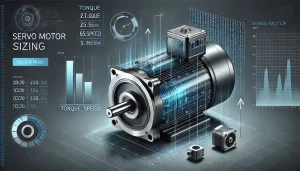
When it comes to motion control systems, selecting the right motor isn’t just about picking something that spins—it’s about ensuring your machine runs efficiently, reliably, and cost-effectively. That’s where motor sizing comes into play. What Is Motor Sizing? Motor sizing is the process of selecting a motor that meets the ...
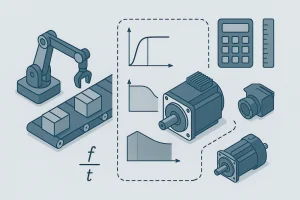
Introduction Servo motors are the high-precision workhorses driving modern robotics, CNC machinery, and automated packaging systems. Selecting the proper size for a servo motor – meaning one with torque, speed, and inertia characteristics matched to the application’s needs – is critical for both technical performance and cost efficiency. An undersized ...

Stepper motors are brushless, synchronous electric motors designed to move in precise increments or “steps” rather than continuous rotation. Unlike a regular DC motor that spins freely, a stepper motor’s shaft rotates at a fixed angle with each input pulse. This means that by sending a specific number of pulses, ...

Electric motors are everywhere—in your fan, your car, your robot vacuum, your 3D printer—and they’re capable of doing some truly incredible things. But for makers, hobbyists, and hardware hackers, motors can feel like a black box: powerful, essential, but intimidating to understand and control. That ends now. With Motors for ...
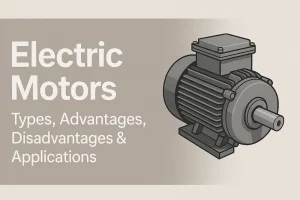
Electric motors are broadly categorized into AC motors and DC motors, each with several sub-types. This report outlines the operating principles, advantages, disadvantages, and typical applications of the major motor types. We focus on uses in industrial, automotive, robotics, and medical equipment domains. Comparative tables are included to summarize key ...

Taking a real-world systems approach to learning motor control devices, UNDERSTANDING MOTOR CONTROLS, 3rd Edition equips you with the knowledge and hands-on skills necessary to install, troubleshoot, and maintain electrical motors like a seasoned professional. Whether you're a student, apprentice, or industry professional, this book provides a structured learning experience ...

VisualSizer is a powerful and advanced servo motor database tool designed to streamline the process of developing motion control applications. It enables users to accurately calculate essential parameters such as speed, torque, and inertia requirements, ensuring optimal motor selection from an extensive database of servo motors. Traditionally, this process required ...
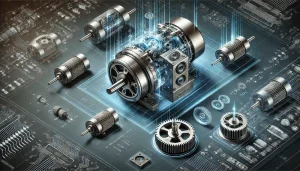
Electric Motors and Drives: Fundamentals, Types, and Applications (Fifth Edition) is designed primarily for non-specialist users and students seeking a clear and practical understanding of electric motors and drive systems. However, researchers and industry professionals have also found it valuable for its ability to demystify fundamental concepts. This book bridges ...
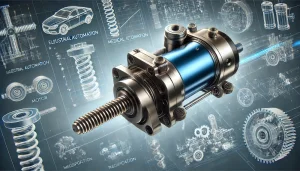
Fundamental Principles Electric linear actuators convert the rotary motion of an electric motor into linear motion (movement in a straight line). This is typically done with a screw mechanism – a threaded shaft (screw) and a mating threaded nut. As the screw or nut rotates, the other component is forced ...
The importance of servo motor sizing should never be underestimated. Properly sizing a motor not only leads to substantial cost savings—reducing energy consumption, purchasing and operating expenses, and downtime—but also enables engineers to design more efficient and reliable motion control systems. However, in an era where modern technology emphasizes tuning ...
See all posts on Motor Sizing Fundamentals…
Electric Motors and Drives: Fundamentals, Types and Applications
 Electric Motors and Drives: Fundamentals, Types and Applications (Fifth Edition) is designed primarily for students and non-specialist users seeking a practical understanding of electric motors and drive systems. However, its clarity and depth have also made it a valuable reference for researchers and industry professionals. Bridging the gap between highly analytical textbooks and detail-heavy handbooks, the book offers clear explanations of how each motor and drive system functions.
This extensively revised and expanded fifth edition covers all major motor and drive types, including DC, induction, synchronous (with emphasis on reluctance and permanent magnet variants), switched reluctance, and stepper motors. Reflecting recent innovations—particularly in automotive, aerospace, and industrial applications—the book addresses emerging hybrid topologies that blend permanent magnet and reluctance principles. A new physical framework for understanding torque production simplifies the analysis of control strategies required for optimal performance. Additionally, the treatment of inverter switching strategies has been expanded, and key converter topologies are now presented in a unified format. More information…