

When it comes to motion control systems, selecting the right motor isn’t just about picking something that spins—it’s about ensuring your machine runs efficiently, reliably, and cost-effectively. That’s where motor sizing comes into play.
What Is Motor Sizing?
Motor sizing is the process of selecting a motor that meets the specific performance requirements of your mechanical application. It involves calculating and balancing key parameters such as:
-
Load characteristics
-
Torque and speed requirements
-
Inertia and acceleration
-
Duty cycle and motion profile
-
Environmental and mechanical constraints
This isn’t just an academic exercise—motor sizing is essential to designing systems that actually work in real-world conditions.
Why Does Motor Sizing Matter?
1. Avoid Undersized Motors
An undersized motor can quickly overheat, stall, or fail altogether. It won’t be able to deliver the necessary torque or speed under load, and it may wear out faster due to overexertion.
2. Avoid Oversized Motors
Bigger isn’t always better. Oversizing a motor increases initial costs, consumes more power, and often requires a larger drive and mechanical components. This leads to inefficiencies and higher operational costs.
3. Optimize System Performance
Proper motor sizing ensures smooth and precise control, particularly in applications requiring tight position accuracy or fast acceleration. Whether you’re moving a robotic arm or powering a conveyor, sizing the motor correctly enables responsive, stable performance.
4. Enhance Energy Efficiency
A correctly sized motor consumes only the power needed to do the job—nothing more. Over time, this can result in significant energy savings, especially in systems running continuously or under variable loads.
5. Increase Reliability and Longevity
Motors that operate within their design parameters run cooler, experience less stress, and last longer. That means fewer breakdowns, reduced downtime, and lower maintenance costs.
Where Motor Sizing Is Critical
-
Industrial automation: robotics, conveyors, pick-and-place systems
-
Medical devices: pumps, imaging systems, lab automation
-
Aerospace & defense: gimbals, actuators, UAV propulsion
-
Automotive: electric power steering, HVAC systems, drivetrain control
-
Consumer electronics: printers, drones, home automation
How to Approach Motor Sizing
While manual calculations are possible, today’s engineers often rely on motor sizing software—like VisualSizer—to automate the process. These tools take in application-specific inputs and generate recommendations for compatible motors, reducing the time and guesswork involved.
Final Thoughts
Motor sizing may not be the flashiest part of engineering design, but it’s one of the most vital. Taking the time to do it right ensures that your systems work as intended—efficiently, reliably, and safely.
The right motor doesn’t just power your machine—it powers your success.
For more information, see our post Importance of Proper Servo Motor Sizing in Robotics, CNC, and Packaging Systems.
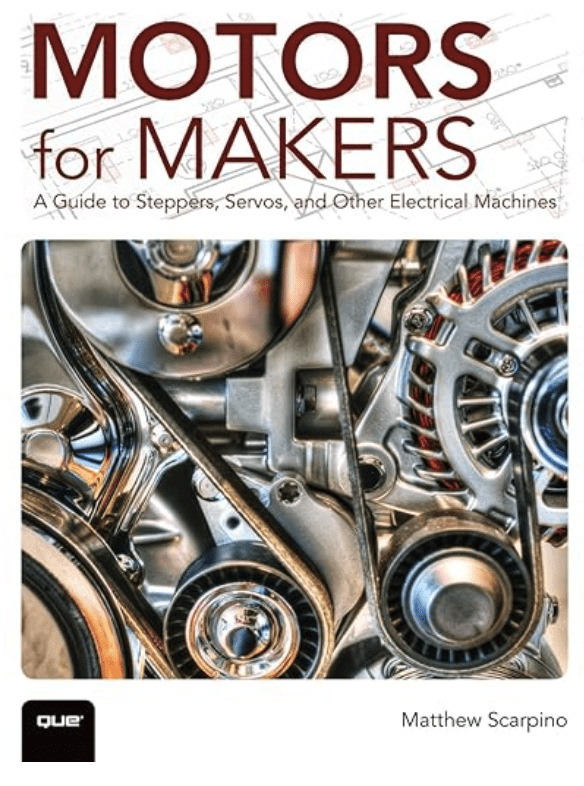 The Ultimate Hands‑On Guide to Electric Motors—for Makers, Hackers, and Innovators is a practical, user-friendly resource designed to help hobbyists, DIY enthusiasts, and hardware hackers understand and work with various electric motors.
The guide covers essential topics such as DC, servo, stepper, and linear motors—highlighting their underlying principles, selection criteria, and real-world applications in robotics, drones, 3D printers, and everyday gadgets.
It’s geared toward hands-on learning, offering step-by-step insights into motor operation, mounting, control techniques, and troubleshooting, making it perfect for anyone eager to integrate electric motors into their own creative projects.
