
 Servo motor sizing is a critical aspect of motion control, ensuring that motors operate efficiently, reliably, and cost-effectively. Proper sizing helps optimize performance by matching the motor’s torque, speed, and inertia to the specific requirements of an application. Selecting the right motor not only improves energy efficiency but also extends the lifespan of mechanical components while reducing operational costs.
As the servo motor industry continues to evolve with advancements in technology, software, and automation, staying informed is essential. Here on our blog, we will regularly publish new posts reflecting the latest research, market trends, and best practices in servo motor sizing. Whether you’re a seasoned engineer or just getting started, our goal is to provide valuable insights that help you make informed decisions about motor selection and system design.
Stay tuned for upcoming articles covering topics such as motor efficiency, the role of gearboxes, real-world case studies, and innovations in motion control technology!

Why VisualSizer Is an Invaluable Tool for Motion Control Engineers

History of Robotics: From Ancient Automata to Modern AI-Driven Machines

The Definitive, Hands-On Guide to Keeping Electric Motors Running Smoothly—Now Fully Updated

The Ultimate Hands-On Guide to Electric Motors—for Makers, Hackers, and Innovators

Develop Extendable Smart Robots with Python and Raspberry Pi — Build, Program, and Evolve Intelligent Machines

Overview of AC and DC Electric Motor Types

Explore the Fascinating World of Robotics!

AI-Powered Robotics: Modern Approaches to Perception, Control, and Applications

Building Your First Robot with Raspberry Pi and Basic Components
AI in Motion Control Applications: Trends, Future, and Business Impact

Servo Motor Market Analysis (2025–2030)

What is VisualSizer – An Overview

Reviving VisualSizer: Upgrading for the Future with a New C# Version

Robotics, Computer Vision, and Control: A Practical Guide with Python and Open-Source Toolboxes

Thomson Electrac HD Linear Actuator Motion Control per CAN Bus

A Comprehensible Guide to Servo Motor Sizing
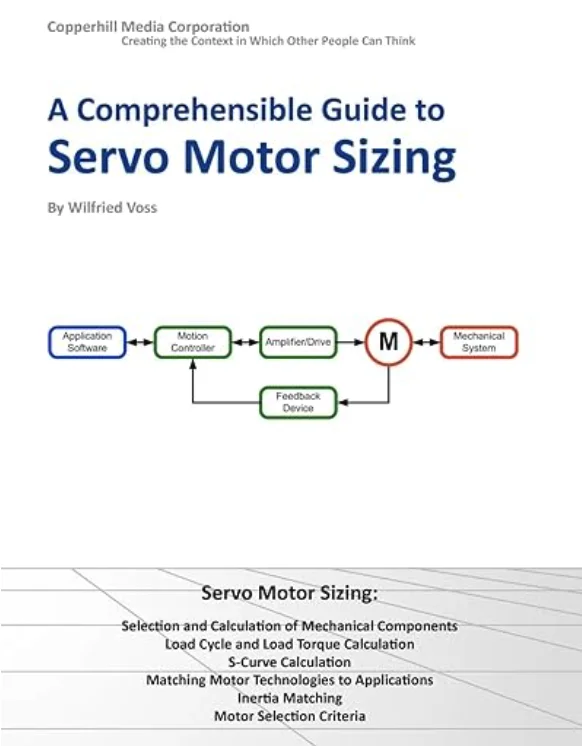 A Comprehensible Guide to Servo Motor Sizing
by Wilfried Voss
The importance of servo motor sizing should never be underestimated. Properly sizing a motor not only leads to substantial cost savings—reducing energy consumption, purchasing and operating expenses, and downtime—but also enables engineers to design more efficient and reliable motion control systems. However, in an era where modern technology emphasizes tuning and programming, fundamental knowledge of mechanical systems and their impact on motor speed, inertia, and torque requirements appears to be diminishing.
Servo motor sizing involves a series of mathematical equations, which, although well-documented, are often presented without direct relevance to the sizing process. This book focuses specifically on servo motor sizing, providing a detailed exploration of inertia and torque calculations for standard mechanical components, as well as a comprehensive guide to the motor selection process. More information…