
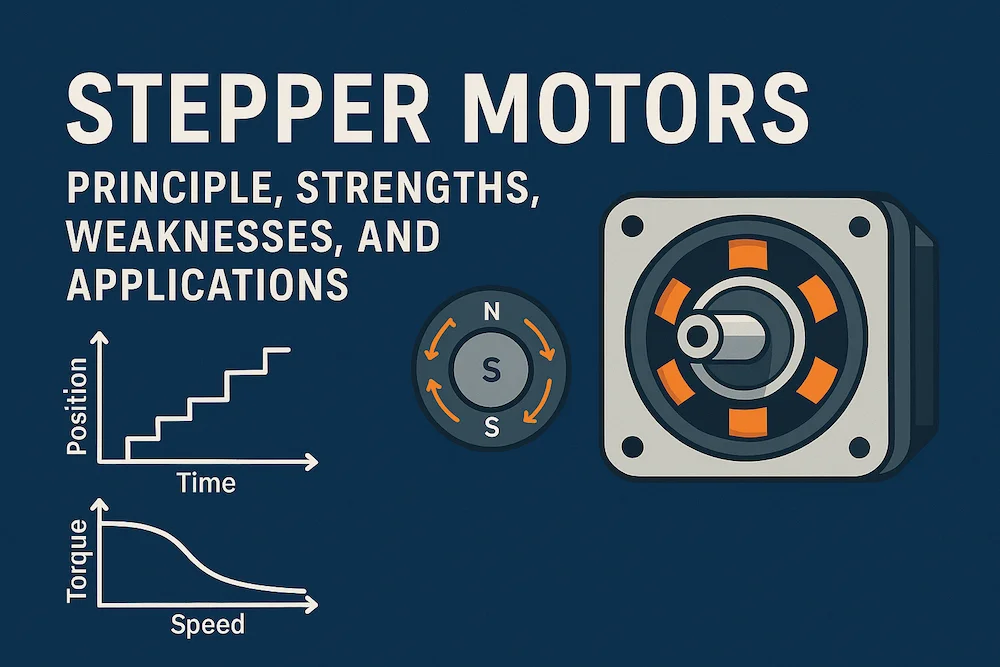
Stepper motors are brushless, synchronous electric motors designed to move in precise increments or “steps” rather than continuous rotation. Unlike a regular DC motor that spins freely, a stepper motor’s shaft rotates at a fixed angle with each input pulse. This means that by sending a specific number of pulses, we can rotate the shaft to a predictable position. Because of this stepping behavior, the position of the motor can be tracked open-loop (without feedback sensors) simply by counting pulses. Stepper motors are widely used in applications requiring accurate positioning and repeatability, such as 3D printers, CNC machines, and camera motion rigs, due to their ability to precisely control movement in a cost-effective way. The following sections explain how stepper motors work, their strengths and limitations, comparisons with other motor types, and typical use cases in the real world.
Operating Principle of Stepper Motors
At its core, a stepper motor converts digital electric pulses into discrete mechanical rotation. Internally, it has a stator (the stationary part) containing multiple electromagnetic coils and a rotor (the moving part), which is often a toothed iron core or a permanent magnet. When a coil (or set of coils) in the stator is energized, it creates a magnetic field that attracts or repels features on the rotor. The rotor aligns itself with this field. By energizing the stator coils in sequence, the motor steps from one position to the next. In essence, each electrical pulse commands the rotor to move at a fixed angle. Figure 1 illustrates a simple cross-section of a stepper motor, showing four electromagnetic coils (stator windings) around a toothed rotor.
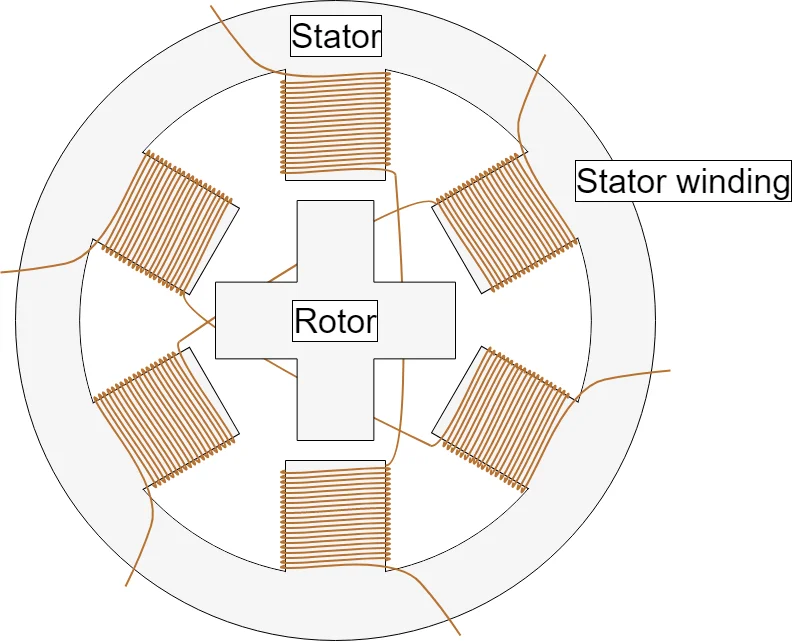
Figure 1 – Source: http://media.monolithicpower.com/wysiwyg/1_11.png
When coil A is energized, the rotor aligns with coil A’s magnetic field; then if coil B is energized next, the rotor rotates slightly to align with coil B, and so on. By switching the currents through the coils in the correct order (phases A, B, C, etc.), the rotor incrementally “steps” to new positions. Figure 2 demonstrates this stepping sequence: the colored stator poles indicate the active coil at each step, and the rotor moves to follow the moving magnetic field.

Figure 2 – Source: http://media.monolithicpower.com/wysiwyg/2_10.png
In a full revolution, the rotor takes many small steps. Most standard stepper motors have a step angle of 1.8° per full step, which means 200 steps make a complete 360° turn. Some designs use smaller steps (e.g. 0.9° for 400 steps/rev) for higher native resolution, or they use a technique called microstepping to electrically subdivide steps for even finer motion. With microstepping, the drive currents are modulated so that intermediate positions can be achieved, yielding very smooth motion and effective positional accuracy on the order of thousandths of a degree. It’s important to note that while microstepping greatly increases resolution and smoothness, the torque per micro-step is lower.
In summary, the operating principle of a stepper motor is simple: energize coils in sequence to drag the rotor around in small fixed increments. Because each step is controlled, the motor’s shaft can be moved to specific angles reliably, which is the key to its precision.
Strengths of Stepper Motors
Stepper motors offer several advantages that make them popular for precision motion control in many projects and devices:
-
Precise Positioning (Open-Loop Control): By their design, stepper motors move in known increments, so the position of the shaft is known by counting input steps – no encoder or feedback sensor is required. This open-loop control simplifies systems and reduces cost, as the motor “naturally” goes to the commanded position (so long as it isn’t overloaded). This precision can be very high; with microstepping, a quality stepper can achieve tiny step sizes (on the order of 0.007° per step in some setups), allowing for extremely fine positioning without complex control algorithms.
-
Simple Drive Electronics: Controlling a stepper is straightforward – usually just a driver that energizes coils in sequence and a pulse source (e.g. from a microcontroller). There is no need for elaborate tuning of control loops or PID parameters to get it to hold a position (unlike servo systems). As long as the stepper driver is chosen correctly, sending step and direction signals is relatively easy and the motor will follow. The control effort is lower compared to many other motor types.
-
Excellent Low-Speed Torque: Stepper motors are optimized to provide high torque at low speeds and can even hold a load at standstill. In fact, a stepper can provide its full rated torque at zero speed (this is often called the holding torque). When the coils are energized but the motor is not stepping, it locks in position and strongly resists external movement. This makes steppers great for holding parts of a mechanism in place without drift. They can, for example, hold up a vertical load (within torque limits) without an external brake. The ability to produce high torque at low RPM is a key advantage over many standard DC motors.
-
Holding Position Capability: As mentioned, steppers inherently hold their position at standstill when energized. They act like a brake because the rotor is firmly attracted to the energized pole. This is very useful in applications where you need to stop at a point and resist a force – the stepper will resist being moved off that position as long as current flows. This holding ability is in contrast to a regular DC motor, which would freely spin if not actively controlled. Stepper motors can essentially “lock” in place with full torque (e.g. to maintain a camera at a set angle or keep a CNC axis stationary).
-
High Reliability and Longevity: Steppers are brushless motors – there are no brushes making or breaking contact as in a classic DC motor. This means less wear and tear. They have relatively few moving parts (mostly the rotor on bearings), so they tend to have long lifespans and require minimal maintenance. As long as they are operated within specifications (temperature, torque, etc.), stepper motors can perform many millions of cycles of movement with very consistent results.
-
Cost-Effective for Precision: For tasks that need precise movement but not high power, stepper motors offer a very cost-effective solution. The motors and their drivers (controllers) are generally affordable, especially in comparison to full servo motor systems. Because no feedback device is required for basic operation, the system cost and complexity stay low while still achieving accurate motion. This is one reason you find steppers in so many hobbyist and mid-range industrial applications – they provide precision on a budget.
In summary, stepper motors excel in situations where precision, repeatability, and simplicity are desired. They give an engineer or student a fine degree of control over position without the need for complex feedback control.
Weaknesses and Limitations
Despite their many strengths, stepper motors have several important limitations and drawbacks that must be considered in design:
-
Limited Torque and Risk of “Missing Steps”: While steppers have good torque at low speeds, their torque output is limited and drops off as speed increases (due to inductive effects and the inability to drive coils as efficiently at high frequency). If a stepper motor is overloaded – for example, if the load requires more torque than the motor can provide or if it’s accelerated too quickly – it may miss steps. This means the rotor fails to reach the commanded step position, losing synchronization with the input pulses. When steps are missed in an open-loop system, the controller has no knowledge of it – the motor will be out of position without any automatic correction. Lost steps can accumulate, leading to large positioning errors. In critical applications, this necessitates conservative designs (ensuring the motor is never asked to deliver more torque than available, with safety margins). Using microstepping or higher step resolutions can actually make missing steps more likely if torque per step is reduced. In short, steppers will stall or slip if pushed beyond their torque capacity, and unlike a closed-loop servo, they won’t correct themselves.
-
Declining Performance at High Speeds: Stepper motors are generally not suitable for very high-speed rotation compared to other motor types. As the pulse rate (step frequency) increases, the torque drops sharply. Eventually, the motor can no longer follow the commanded steps and stalls. In contrast, many DC or servo motors can maintain torque at much higher RPM. Practically, this means steppers are best for low to moderate speed tasks. For example, a stepper might turn a lead-screw at a few hundred RPM effectively, but struggle to go much faster. Additionally, running a stepper at high speeds can excite mechanical resonances (see next point) and cause increased vibration. Steppers also tend to exhibit a phenomenon called “mid-band resonance” – at certain speeds, the motor can vibrate and lose torque dramatically. Without mitigation, a stepper’s torque-speed curve typically falls to near zero by a certain frequency, so they are not ideal for applications requiring both high speed and high torque.
-
Vibration and Resonance: The discrete stepping of the motor can introduce vibration. Each time the rotor moves to a new step, it may slightly overshoot and then get pulled back, causing a damped oscillation. At certain stepping frequencies, these oscillations can accumulate and create a resonance. Stepper motor resonance can lead to increased noise, noticeable vibration, and even missed steps if the oscillation grows large. The motor may “buzz” or shake at particular speeds (often in the mid-range of its speed capability). This can be problematic in precision systems, as it reduces accuracy and repeatability. Engineers typically combat this by using microstepping (for smoother, smaller steps), adding dampers or mechanical friction, or avoiding the specific speeds that cause resonance. While techniques exist to reduce it, resonance is a known weakness that must be managed in stepper-driven designs.
-
No Feedback (Open Loop Drawback): The same open-loop nature that is a stepper’s strength can also be a weakness. Because the controller “assumes” the motor goes where it’s told, there’s no automatic error correction. If anything disturbs the system (unexpected load, a physical obstruction, etc.), the stepper could deviate from the commanded position and the system won’t know it. This is unlike a servo system which constantly corrects errors via feedback. Additionally, stepper motors do not know their absolute position at startup – when powered on, they need to be moved to a reference point (homed) to establish a known position, since there’s no built-in memory of position when unpowered. For example, many 3D printers and CNC machines move the axes to a end-stop switch on startup to zero the position. This adds complexity in use since a homing routine is required every time the system resets or powers up.
-
Continuous Power Draw and Heating: Stepper motors tend to draw current regardless of whether they are moving or holding. To maintain holding torque, the coils must remain energized. In many designs the stepper is always powered to some degree, even when idle, to ensure it doesn’t lose position. This leads to a constant power draw, which is inefficient. As a result, steppers often run hot to the touch – the energy not converted to mechanical work ends up as heat in the coils. The efficiency of stepper motors is generally lower than that of DC motors, especially when holding position. They can consume significant power even when no movement is happening, which can be a disadvantage in battery-powered or energy-sensitive systems. The heat dissipation needs to be considered to avoid overheating the motor or nearby components.
-
Limited Torque Density: In a given size, stepper motors usually provide less torque and power than an equivalently sized servo motor. They have a lower torque-to-inertia ratio and lower power density. This means for high-torque applications, the stepper might be bulkier or heavier than another motor type delivering the same torque. Steppers also cannot exploit mechanisms like gearbox feedback or high RPM to multiply power (because they lose torque at high speeds). If an application requires a lot of power or torque, steppers might not meet the need, or you may need to select a physically larger motor, which increases weight and size.
In summary, stepper motors are not well-suited for high-speed or high-power scenarios, and their open-loop nature can be a liability if not carefully accounted for. Engineers using steppers must ensure the motor is strong enough to handle the worst-case load (to avoid missed steps) and often implement methods to mitigate resonance and overheating. If an application demands very dynamic motion, high speeds, or absolute reliability under varying loads, a stepper might struggle – this is where other motor types (like servos) become preferable.
Comparison with Other Motor Types
To put these strengths and weaknesses in context, it’s helpful to compare stepper motors to other common motor types. We will contrast stepper motors with standard DC motors and servo motors, highlighting differences in operation, control, cost, and typical application suitability.
Stepper Motors vs. DC Motors (Brushed DC)
A DC motor (brushed DC motor) operates on a different principle than a stepper. In a brushed DC motor, a continuous rotational motion is produced by electromagnetic coils and a commutator that switches current to keep the rotor spinning. Here’s a point-by-point comparison:
-
Operation: A DC motor is built for continuous rotation with a smooth motion, whereas a stepper motor is built for incremental motion. When you apply a constant voltage to a DC motor, it will spin at a certain speed (until friction and load balance the motor’s torque). In contrast, a stepper motor will move a fixed step then stop until the next command pulse arrives. This means steppers inherently move in a quantized fashion (e.g., 1.8° per step), while DC motors provide analog motion. Also, torque characteristics differ: both motor types tend to have their highest torque at low speeds or stall, but as speed increases, a DC motor’s torque usually declines linearly, whereas a stepper’s torque drops off more sharply at high step rates. Essentially, DC motors are better at higher speeds, while stepper motors specialize in controlled low-speed movement.
-
Control: Controlling a DC motor’s speed is typically done by adjusting the voltage or using pulse-width modulation (PWM) – this changes the speed of rotation in a continuous manner. However, controlling its position requires additional components; a DC motor alone has no concept of “steps” or absolute position. If precise positioning is needed, a DC motor must be used in a closed-loop system (as a servo) with an encoder or potentiometer for feedback. In contrast, a stepper motor is inherently a position-control device: you tell it how many steps to move, and it moves roughly that amount, open-loop. There’s no need for feedback for many applications because the commanded step count itself ensures the position (within the motor’s capabilities). The trade-off is that a stepper’s controller must carefully manage the step pulse sequence and speed (acceleration/deceleration profiles) to prevent missteps, whereas a basic DC motor’s speed control is simpler but any precise positioning absolutely requires feedback and more complex control.
-
Cost and Complexity: For basic operations, DC motors are generally simpler and cheaper. A small DC motor plus a simple driver (or even just a battery and switch) can get you rotation easily – this simplicity makes DC motors very cost-effective in applications like fans, toys, or appliances. In comparison, a stepper motor requires a specialized driver that can pulse the coils in sequence, which adds to complexity and cost. Stepper motors themselves can also be a bit more expensive than equivalently sized DC motors because of their multi-tooth rotor and precise construction. However, if you need positioning, the cost picture changes: a DC motor will then require an encoder, a microcontroller or dedicated controller for feedback, and perhaps a gearbox to achieve fine positioning, effectively turning it into a servo system. In that case, a stepper might actually be the more cost-effective choice for moderate performance needs, since it achieves precise positioning without the extra sensors. In summary, for simple high-speed or continuous rotation tasks, DC motors win in simplicity and cost, but for built-in position control, steppers provide an economical solution without the complexity of feedback loops.
-
Holding Torque and Stability: A stepper motor can hold its position (with full torque) when stopped, simply by keeping the last coil energized. A DC motor has no such ability on its own – if you remove power, it freewheels, and even if powered, it won’t “lock” to a position unless a brake is applied or a feedback loop actively corrects it. This means steppers are naturally better for applications where you need to stop and hold a load at a specific position. DC motors would require additional mechanisms to do the same. On the flip side, when a stepper motor holds position, it continuously consumes power and may run hot, whereas a DC motor at rest (unpowered) consumes nothing (but also provides no holding force). So steppers trade efficiency for holding capability.
-
Suitability for Applications: DC and stepper motors often occupy different niches. DC motors shine in applications requiring continuous rotation, especially at moderate to high speeds or variable speeds, without extremely precise positioning. Examples: DC motors are common in fans, pumps, drills, wheels of mobile robots, and so on – where you mostly care about speed or power, not exact angles. Stepper motors, in contrast, are preferred in applications where movement must be controlled and repeatable with precision, and where speed is lower. Examples: steppers drive the axes of CNC machines and 3D printers, the motion of plotters or XY tables, and other devices where the ability to move to a precise coordinate is crucial. Steppers are also used in things like camera platforms or small robotics where complex motion profiles are needed but the load is predictable. It’s not that one is categorically better than the other – they are optimized for different tasks. Often, design considerations like required speed range, torque, positioning accuracy, and budget will determine whether a simple DC motor or a stepper motor (or even a hybrid approach) is the right choice for a given project.
Stepper Motors vs. Servo Motors
The term servo motor in this context refers to a motor (often a DC brushless or brushed motor) that is paired with a feedback sensor (like an encoder) and controlled in a closed-loop manner to follow commands precisely. Servo motors are common in high-performance motion control where the system actively corrects any error between commanded and actual position. Let’s compare stepper and servo systems:
-
Operation Principle: A stepper motor moves in discrete steps dictated by the input pulses, and unless it loses steps, it inherently knows its position based on counts. A servo motor, by contrast, is continuously modulated: it can be thought of as a DC or AC motor that is commanded to go to a target position or speed, and an onboard controller continuously adjusts the motor’s input to minimize the error to that target (using feedback from an encoder). In practical terms, a stepper is like an open-loop position device – you tell it “go 90° clockwise” by pulses and assume it did so – whereas a servo is a closed-loop system that you tell “go to 90°” and it actively drives there and holds, correcting for disturbances. Servo motors don’t move in fixed increments; they can rotate continuously and stop at arbitrary angles as commanded. This means servo motion is typically smoother and can be faster, especially for large moves, since it’s not limited by step resolution. Additionally, servo motors can accelerate rapidly and handle dynamic changes because the control system will apply whatever current is needed (within limits) to achieve the commanded motion. Steppers, on the other hand, have to be accelerated more gently to avoid losing sync, and cannot exceed their fixed step rate limits without stalling.
-
Control and Feedback: Stepper control is comparatively simple (sequence pulses, no feedback required in normal operation). Servo control is more complex – it requires continuous feedback from an encoder or resolver and a control algorithm (typically a PID controller in the servo driver) to adjust the motor’s input. This difference has several implications. First, servo motors always know their position, even after power cycle, if using an absolute encoder (or they can find it via calibration if using incremental encoders with an index). They will actively correct if an external force tries to move them off position. A stepper will not correct position if disturbed and will not know if it’s moved when unpowered. Second, tuning a servo system (setting gains for the control loop) can be an involved process – if tuned poorly, a servo may oscillate or overshoot. A stepper doesn’t require tuning of feedback gains; however, you do need to choose appropriate step rates and perhaps ramp profiles, which is generally easier to handle. In short, servo motors provide feedback and self-correction, whereas steppers are blind and simply execute the input commands. This makes servos more robust in variable conditions but at the cost of a more complex controller.
-
Speed and Torque Performance: Servo motors excel in providing useful torque over a wide speed range. A well-chosen servo motor can maintain near constant torque from stall up to high rotational speeds (and can often even temporarily exceed its continuous torque rating for short “peak” bursts). Stepper motors, as discussed, have maximum torque at low speed (stall) and their torque falls off drastically as speed increases. At high speeds, a stepper’s available torque drops to near zero, meaning it can barely overcome any load, whereas a servo might still be going strong. This gives servo systems a big advantage in high-speed or high-throughput applications. Additionally, servo motors can handle transient loads by briefly providing higher than rated torque (using current surge) – for example, to overcome a sudden load or to accelerate quickly. Stepper motors do not have a concept of “peak torque” beyond their stall torque – if you exceed it even momentarily, they just lose sync. Moreover, servo systems typically can reach much higher top speeds (many thousands of RPM for rotary servos) while steppers are limited in how fast they can step. The bottom line: for high-speed motion or varying loads, servos are generally superior. Steppers are usually chosen for slower, static, or predictably loaded situations where their torque is sufficient.
-
Precision and Resolution: This is an interesting point of comparison because both motor types can be very precise, but in different ways. A standard stepper might have 200 steps/rev (1.8° per step) or even 400 steps/rev (0.9°). With microstepping, the drive can command, say, 20,000 microsteps per revolution, which is a theoretical resolution of 0.018° per microstep. However, the actual accuracy might be less due to motor physics and torque limitations at microsteps. A servo motor’s precision comes from its encoder and control; for example, a servo might have an encoder with 10,000 counts per revolution, and the control loop can position the motor within a few counts, achieving perhaps 0.036° accuracy or better. High-end servos can have even finer encoders (20-bit, 24-bit) giving millions of counts per revolution, yielding extremely high resolution. The difference is that a stepper’s accuracy is open-loop approximate (it will usually be within a few percent of a step for each commanded step, errors can accumulate if it’s mis-loaded), whereas a servo’s accuracy is actively corrected continuously, so it can attain high accuracy and correct any small deviations immediately. Practically, for most applications both can be made sufficiently accurate – steppers are often quoted with ±0.05° to ±0.1° accuracy per step under no load. For higher precision or for critical accuracy under varying load, servos tend to be the go-to solution.
-
Cost and Complexity: Generally, stepper systems are cheaper than servo systems. A typical stepper motor plus driver is quite affordable, especially for smaller sizes. Servo motors (in the industrial sense, not hobby RC servos) typically cost more because they use high-quality magnets, high-resolution encoders, and require more sophisticated drivers. The primary downside of servo motors is indeed their higher cost compared to stepper motors, especially in lower power ranges. If an application’s requirements (precision, torque, speed) can be met with a stepper, then using a stepper is often more economical and simpler. Servos also have ongoing costs in terms of commissioning – tuning the servo, maintaining the feedback device, etc. In contrast, a stepper can often be “drop in and go” for many basic tasks. However, it’s worth noting that servo systems can yield savings in other ways: for example, a servo might complete a task faster (higher throughput), or handle a variety of loads without redesign, which can justify their cost in industrial settings. As a rule of thumb, use a servo when the performance needs justify it; otherwise, a stepper is the more cost-effective choice. For example, in an application that doesn’t require high speed or heavy torque, a stepper is likely more than sufficient and much cheaper. On the other hand, if you have a high-speed pick-and-place robot, a stepper would not keep up, and a servo’s cost is justified by the needed performance.
-
Typical Applications: Stepper and servo motors often do not compete head-to-head but rather fill different application niches. Stepper motors are common in devices where the load is predictable and motion needs are modest. We see them in 3D printers, small CNC machines, laser cutters, PCB milling machines, office printers and scanners, automated telescopes, and hobby robotics – these are cases where open-loop control is acceptable and the speeds are moderate. The emphasis is on precision and cost-effectiveness. Servo motors are found in more demanding applications: industrial robotics, CNC machining centers, factory automation, conveyor systems, automotive manufacturing equipment, and anywhere fast and accurate motion is required under varying load. For instance, an industrial robot arm that moves quickly and handles heavy parts will use servo motors at its joints. High-end CNC mills that cut metal at high speeds use servos to handle the dynamic forces and maintain accuracy. Even in 3D printing, some cutting-edge or larger machines are starting to use servos to allow faster printing without losing accuracy, whereas most hobby printers use steppers. Another example: camera gimbals and drones often use servo-like brushless motors with feedback (to stabilize cameras), because they need rapid response. In summary, use a stepper motor for simpler, lower-speed precision tasks; use a servo motor for high-speed or high-power tasks or when you need the assurance of closed-loop control. It’s not uncommon to see both used together in complex systems (each for what they do best).
To conclude the comparison, steppers and servos each have their place. A stepper motor is like a sure-footed hiker that takes one step at a time and counts each step – simple and reliable as long as it doesn’t carry too much weight. A servo motor is like a trained driver with GPS – it will correct its course actively and can run at full speed, but needs a more sophisticated setup. Choosing between them involves balancing cost vs. performance: if the simpler stepper meets the requirements, it’s often the preferred choice; if not, a servo system is the next step up.
Typical Applications of Stepper Motors
Thanks to their unique characteristics, stepper motors are used in a wide variety of real-world applications where precise, controlled movement is required at a reasonable cost. Below are some common application domains and why stepper motors are well-suited for them:
-
3D Printers: Most desktop 3D printers rely heavily on stepper motors to position the print head (X and Y axes) and move the print bed or nozzle up and down (Z axis), as well as to drive the filament feed. Steppers are ideal here because the printer’s controller can accurately issue steps to deposit plastic in exact locations layer by layer. No feedback is needed since the loads are predictable – the printer simply homes the axes at startup and then counts steps to know the nozzle’s position. The precision of stepper motors allows consistent layer alignment and detailed prints. They also provide holding torque to keep the head in place when needed. This setup is cost-effective, which is crucial in keeping 3D printers affordable. (In 3D printers, stepper motors typically drive the motion on all axes and the extrusion mechanism.)
-
CNC Machines and Laser Cutters: Hobbyist and mid-range CNC routers, mills, and laser cutters often use stepper motors for moving the tool or platform. For example, a small CNC milling machine might use a stepper on the X, Y, and Z axes to move the cutter to programmed coordinates. Steppers provide the necessary precision for shaping objects, and the open-loop control works fine as long as the machine is properly calibrated and not overloaded. The strong holding torque is useful for maintaining position against cutting forces (within limits). In laser cutting or engraving machines (essentially 2D CNC), steppers rapidly and precisely position the laser head to trace patterns. The cost advantage is significant for these machines – using servos would raise the price considerably. Industrial CNC machines (cutting metal at high speeds) often do use servos for the extra performance, but steppers dominate in DIY, hobby, and light-duty CNC equipment.
-
Camera Sliders and Motion Control Rigs: In photography and cinematography, stepper motors are commonly used to create controlled camera movements. For instance, a motorized camera slider uses a stepper to move a camera smoothly along a rail for time-lapse or video shots. Because the stepper can execute very small moves, the motion can be finely tuned (e.g. a very slow crawl for a long time-lapse or a precise repeatable movement for special effects). Similarly, pan-tilt heads that rotate cameras for panoramic photography or surveillance can use stepper motors to incrementally move to exact angles. The quiet operation (especially with microstepping) and precision are big pluses here. These rigs benefit from open-loop control – the system simply tells the stepper how much to move, and the camera points exactly where it should. Many DIY camera control projects use Arduino or similar boards paired with stepper drivers to achieve professional-looking motion control on a budget. (Stepper motors are commonly found in video camera pan/tilt units and focus mechanisms as well, which is analogous to their use in sliders.)
-
Printers and Scanners: Beyond 3D printers, ordinary 2D inkjet and laser printers, as well as flatbed scanners, often use stepper motors internally. In an inkjet printer, for example, a stepper motor will precisely move the printhead carriage back and forth across the page, and another stepper will increment the paper feed roller by exact amounts between strokes. This ensures each line of text or graphics is properly aligned. The repeatable stepping means every line prints at the correct position without needing an expensive optical encoder strip (although some printers do use one for added feedback). Similarly, a scanner might use a stepper to drive the scan head under the glass, one line at a time. The repeatability of the stepper ensures the scan lines are evenly spaced. These motors keep printers and scanners accurate while keeping costs low.
-
Robotics and Automation: Stepper motors are found in many robotic devices, especially in hobby or light industrial robotics. For example, a robotic arm that sorts small objects could use stepper motors at its joints if the required speeds and torques are within a stepper’s capability. The controller can precisely control joint angles by commanding steps, achieving accurate pick-and-place operations. Steppers provide a simple solution for coordinated motion in multi-axis robots where the paths are known in advance. They are also used in robotic grippers or CNC pick-and-place machines for electronics, where the head needs to move to exact component positions repeatedly. In laboratory automation, such as auto-samplers or syringe pumps, stepper motors precisely control linear slides or plunger positions to dispense exact volumes or move samples between locations. The key in all these cases is that steppers offer reliable, repeatable motion without the cost of full servo systems, and the tasks have a well-defined range of motion that can be calibrated.
-
Automotive and Instrumentation: You can even find stepper motors in car dashboards – many modern analog gauge clusters (speedometer, fuel gauge, etc.) use tiny stepper motors to position the needle. Each step corresponds to a certain tick on the dial. They’re used because they can be controlled by the car’s computer very precisely to display readings, and they stay where they are commanded (which is good if power is cut – some designs will return to a home position on restart). In older hard drives and floppy disk drives, stepper motors were used to position the read/write head over the correct track on the disk with fine precision (though hard drives eventually moved to voice coil servos for better speed). They’re also used in some autofocus mechanisms and zoom mechanisms of cameras (especially older DSLR lenses) where precise incremental movement is needed for focusing.
-
Miscellaneous Machinery: There are countless other uses. Stepper motors drive the rotation of lead screws in linear actuators for positioning systems. They are used in some types of clocks or display signs where controlled movement is needed. Textile machines might use steppers to feed fabric at precise rates. ATM machines and bill validators use stepper motors to pull in and position banknotes reliably. In medical devices, stepper motors drive things like precise rotary valves or motion stages in imaging equipment. The common theme is precision and repeatability at a reasonable cost.
Each of these applications takes advantage of the stepper motor’s strengths: the ability to move to a commanded position accurately and hold there, without requiring complex feedback control. Of course, engineers must design within the limitations (ensuring the motor isn’t overloaded, and managing speeds to avoid missed steps), but when applied appropriately, stepper motors provide elegant solutions to motion control challenges. It’s this balance of precision and simplicity that has made stepper motors a staple in everything from desktop gadgets to industrial machines.
Conclusion
Stepper motors are a fundamental technology in motion control, offering a unique blend of precision and simplicity. We’ve seen that a stepper motor’s operating principle – incremental motion via electromagnetic pulses – allows it to achieve fine position control in an open-loop system. This makes it invaluable for applications where predictable, repeatable movement is needed. We’ve also discussed how stepper motors shine with strengths like easy control, good low-speed torque, and holding capability, while having notable weaknesses including limited high-speed performance, potential for resonance, and lack of feedback. Comparisons with DC and servo motors highlighted that each motor type has its niche: steppers fill the gap for low-medium speed, precise positioning tasks without the cost of feedback, whereas servos take over when speed, power, or adaptive control are paramount, and DC motors serve well for simple continuous-speed needs.
For students and engineers, understanding stepper motors is important not just to use them, but also to grasp broader concepts in electromechanical systems – like how digital signals can control mechanical movement, and what trade-offs are involved in different motor choices. Whether it’s making a robot draw a picture, a 3D printer crafting a prototype, or a telescope tracking a star, stepper motors provide a reliable way to translate commands into motion. By carefully considering their advantages and limitations, one can design very effective systems. In the end, the choice of a stepper (versus other motors) comes down to the specific requirements of the project: if you need accurate, controlled motion at low cost and can live within the speed/torque limits, the stepper motor is often the perfect fit. The stepper motor truly demonstrates the beauty of electromechanical engineering – with just a coil of wire and some clever design, we can “step” our way to precise motion control.
